
A Comparative Look at Flowcharts and Mind Maps in Educational Settings
Understanding the Basics of Flowcharts and Mind Maps
In the realm of education and self-improvement, organizing information effectively is crucial for both educators and learners. Two popular methods for this are flowcharts and mind maps. These tools offer unique ways to visualize information, enhance comprehension, and improve memory retention. Let's explore each method's foundational concepts to understand where they shine in educational settings.
Flowcharts: A Linear Approach to Process Visualization
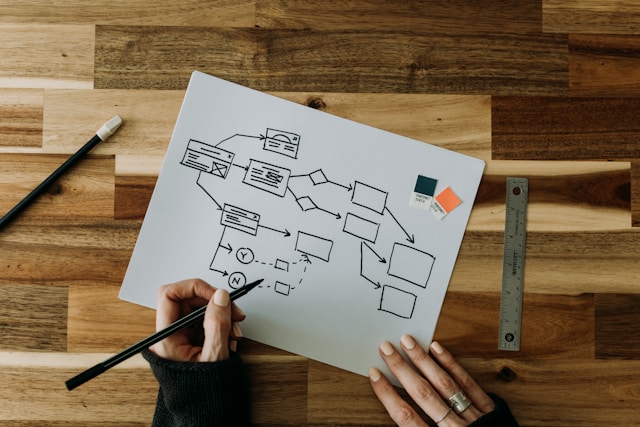
Flowcharts are diagrams that represent processes, workflows, or algorithms in a step-by-step manner. They use standardized symbols like rectangles, diamonds, and arrows to indicate actions, decisions, and flow directions. In educational settings, flowcharts are particularly effective for subjects requiring logical sequencing and clear process visualization.
- Example: In a biology class, a flowchart might be used to illustrate the steps of cellular respiration, breaking down each phase into manageable parts for students to follow logically.
Mind Maps: A Radial Approach to Idea Organization
Mind maps provide a visual representation of ideas radiating from a central concept. They allow for a non-linear approach to brainstorming and organizing information, often employing colors and images to enhance creativity and memory retention. This technique is beneficial in settings where relationships between different ideas need to be established.
- Example: In a literature class, students could use a mind map to explore themes and character connections within a novel, allowing for an intuitive understanding of complex narrative structures.
Strengths and Weaknesses of Flowcharts
Flowcharts excel in situations where process clarity is paramount. Their structured nature provides a visual roadmap that makes it easier to follow logical progressions. However, they come with limitations that educators should consider.
Advantages of Flowcharts
- Clarity: Provides clear steps and directions, making complex processes understandable.
- Problem-Solving: Useful in identifying potential bottlenecks or decision points in a process.
- Standardization: Uses universally recognized symbols that facilitate communication across disciplines.
Disadvantages of Flowcharts
- Lack of Flexibility: The linear structure can limit creative exploration or broader conceptual thinking.
- Difficulties with Complex Information: As processes become more intricate, flowcharts can become overcrowded and hard to read.
A practical tip for educators using flowcharts is to encourage students to start with high-level overviews before diving into detailed sub-processes, helping maintain clarity.
The Unique Benefits of Mind Maps
Mind maps offer advantages in areas where flexibility and creativity are valued. Their non-linear structure allows for dynamic exploration of ideas, making them ideal for certain educational tasks.
Advantages of Mind Maps
- Flexibility: Supports free association and exploration of concepts without strict rules.
- Creativity Boost: Encourages use of colors and images, which can enhance memory retention.
- Connection Building: Helps illustrate connections between disparate ideas or subjects.
Challenges with Mind Maps
- Lack of Standardization: Absence of standardized symbols can lead to confusion or misinterpretation if not well-executed.
- Overwhelming Complexity: Extensive mind maps can become visually cluttered, reducing their effectiveness.
An effective strategy for educators is to guide students in creating mind maps by setting boundaries on the number of branches and emphasizing the use of thematic colors or icons to represent different categories.
Practical Scenarios: When to Use Each Tool
The decision to use a flowchart or a mind map often depends on the task at hand. Let’s delve into specific scenarios where each tool might be most effective.
When to Choose Flowcharts
- Coding Classes: When teaching programming logic, flowcharts can help students understand loops, conditionals, and functions.
- Chemistry Experiments: Visualizing procedural steps ensures students grasp the sequential nature of experiments like titration or distillation.
When to Opt for Mind Maps
- History Lessons: Exploring causes and effects of historical events or wars benefits from the interconnected nature of mind maps.
- Language Learning: Vocabulary expansion through thematic mind maps fosters associative learning and memory retention.
For educators, a blended approach may sometimes be the best choice—starting with a flowchart for understanding basic sequences and transitioning to a mind map for exploring deeper connections within the material.
Tying It All Together: Deciding Which Tool Is Right for You
Selecting between a flowchart or a mind map ultimately depends on your educational objectives. Reflect on the nature of the material you aim to teach or learn, considering factors such as complexity, need for creative thinking, and potential for interconnected ideas.
A useful guideline is to ask yourself whether the task requires structured process understanding (favoring flowcharts) or if it's more about exploring relationships and fostering creativity (favoring mind maps).
A case study involving a university project demonstrates this decision-making process: Students tasked with developing a marketing plan started with a flowchart to delineate project phases clearly. As they delved deeper into target market analysis and campaign creativity, they transitioned into mind mapping sessions to brainstorm innovative strategies.
Conclusion: Harnessing Both Tools for Maximum Impact
The effective use of flowcharts and mind maps in educational settings can significantly enhance comprehension and memory retention. By understanding the strengths and weaknesses of each tool, educators and learners can make informed decisions that align with their educational goals. Whether you're visualizing complex processes or unraveling intricate webs of ideas, these techniques empower you to create meaningful learning experiences tailored to your unique needs.